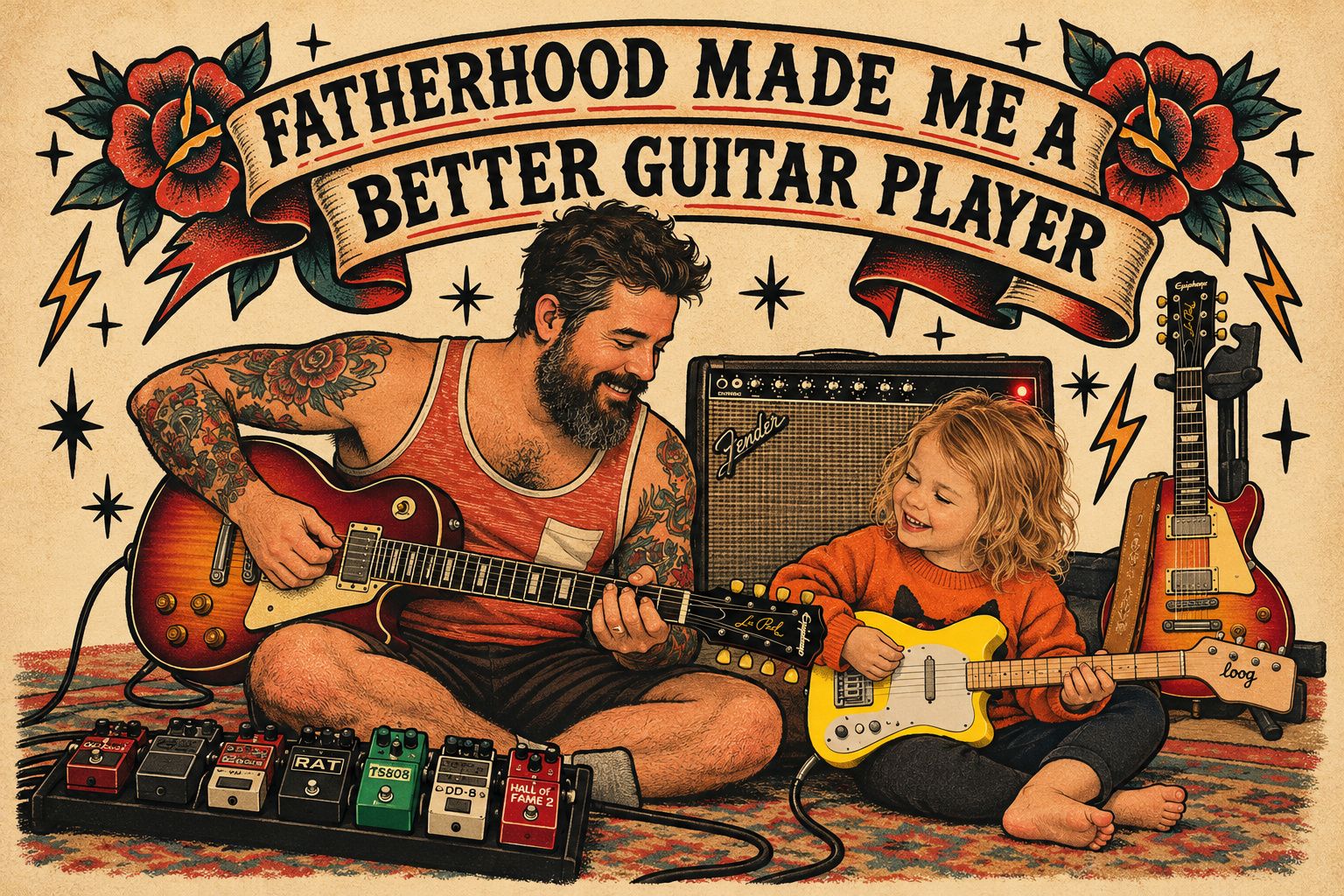
Fatherhood Made Me a Better Guitar Player
When my wife was pregnant, I figured my guitar days were numbered. New baby, no free time, hobbies on the shelf.
The opposite happened. I've played guitar and bass on and off for 15 to 20 years, depending on who's counting, and I'm playing better now than ever.
I'm home more, I practice more, and a little over a year ago I spent $47 on a course that finally connected the dots.
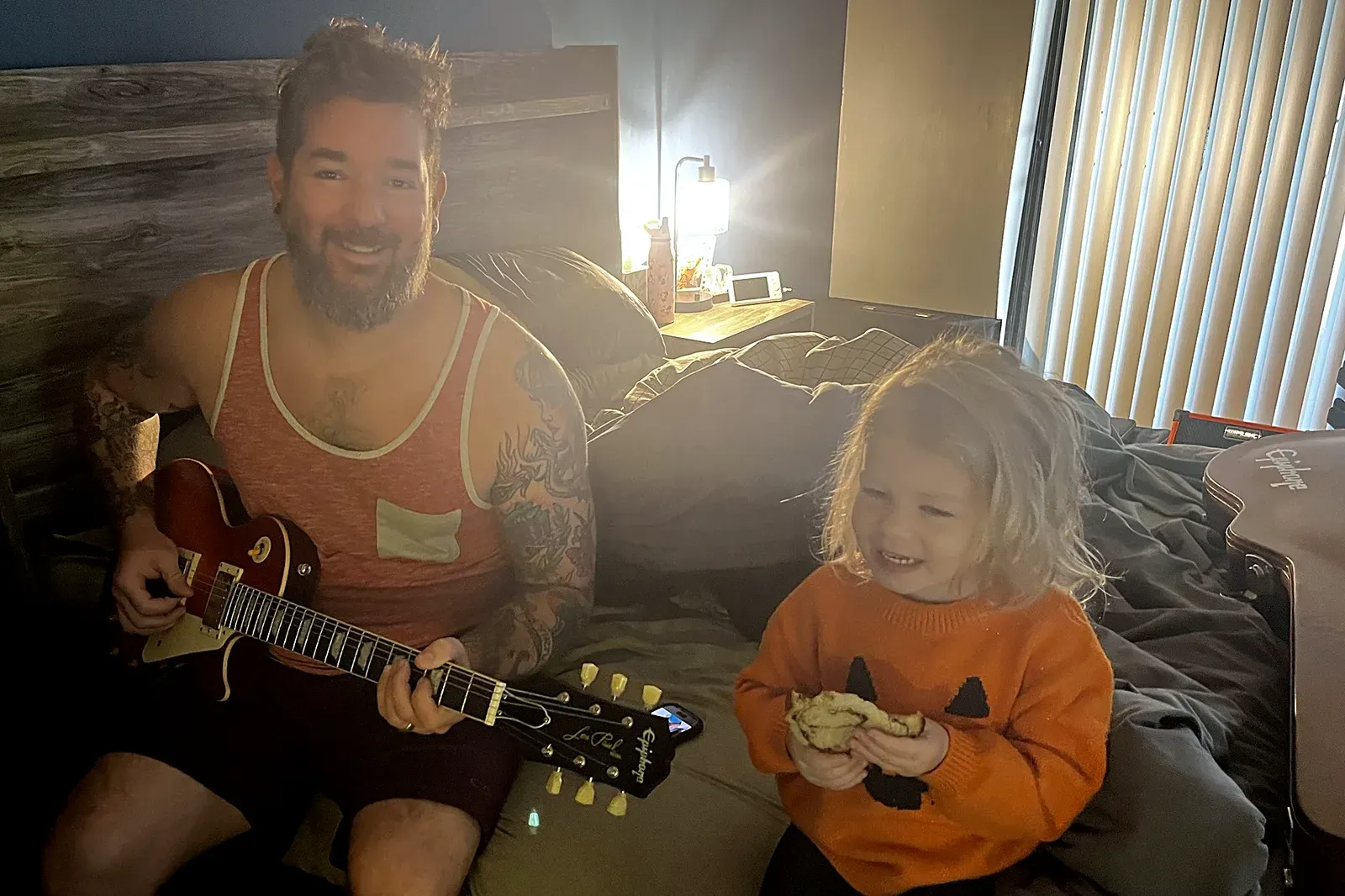
That's me on the Epic Solo, the final lesson in Eddie Haddad's Ultimate Guitarist Blueprint.
It sits in A minor, slips into what I think is Dorian at the key change, borrows some major pentatonic and resolves back to A minor.
For years I learned leads off YouTube without knowing why they worked. Now I mostly do.
Starting quiet
When Radley was a baby, I played acoustic or kept the amp low during naps and after bedtime. As she's grown, I've found more windows: a few nights a week, a weekend morning, a day off like the one I took to film that video.
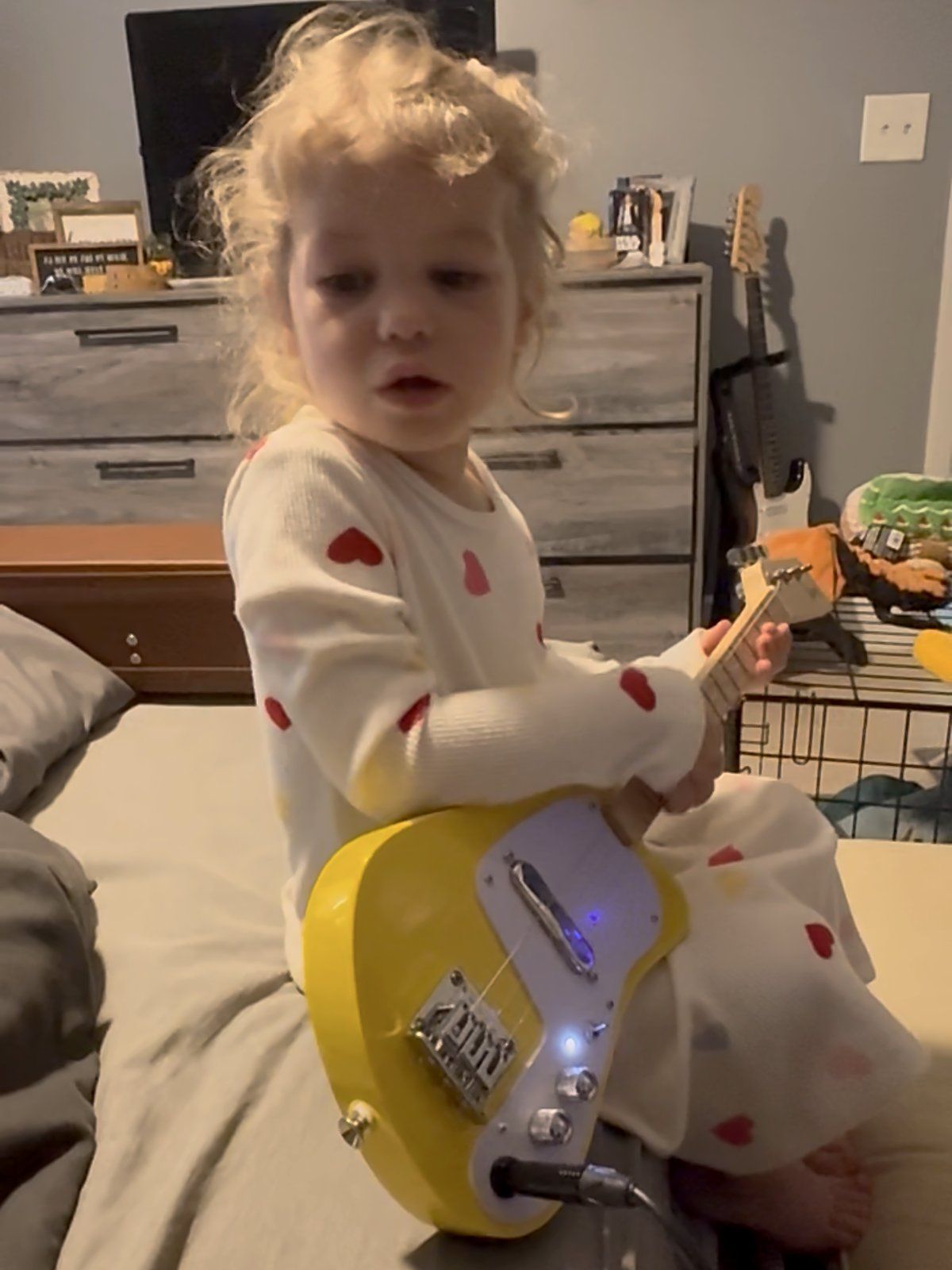
Last Christmas, right after her second birthday, I bought Rad a yellow Loog. It's rated for ages 3 and up, so for now she's just getting comfortable holding it.
She doesn't care. When I sit down to practice, she runs to grab hers.
Why creative hobbies matter
Learning an instrument takes discipline, and that discipline carries into everything else.
It shuts out the noise of daily life, because you can't stress about bills while you're trying to land a bend in time. And your kid is watching.
Whatever Rad ends up loving, I want her to see grown-ups make things for the fun of it.
I'm not the only one who feels it. A 2020 survey commissioned by Spotify found 89% of UK adults who regularly play an instrument said it helped their mental health, and the most common time they played was after a stressful day at work. That tracks.
You can do this
It doesn't take much money. I once paid $10 a month for a slick Fender course built for beginners.
I was past that stage, and I sat on autopay for something I didn't use. The Blueprint cost $47 once and came with more lessons than I'll ever finish.
The user experience is janky, and I've seen people trash courses like this over the interface. I didn't care. The material is deep, and it met me where I was as a player.
I won't pretend a beginner can get where I am in a year, or that I'm anywhere near done. Nobody needs to clap for this. I play for me, for my soul and my sanity. It keeps me level-headed for everything else on my plate.
The rig
I've upgraded gear here and there, but I make myself learn and play before buying something just because I got an itch.
I still practice plenty on my Orange Crush Pro 120 solid-state because it's convenient. The real magic happens when the pedalboard hits the Fender.
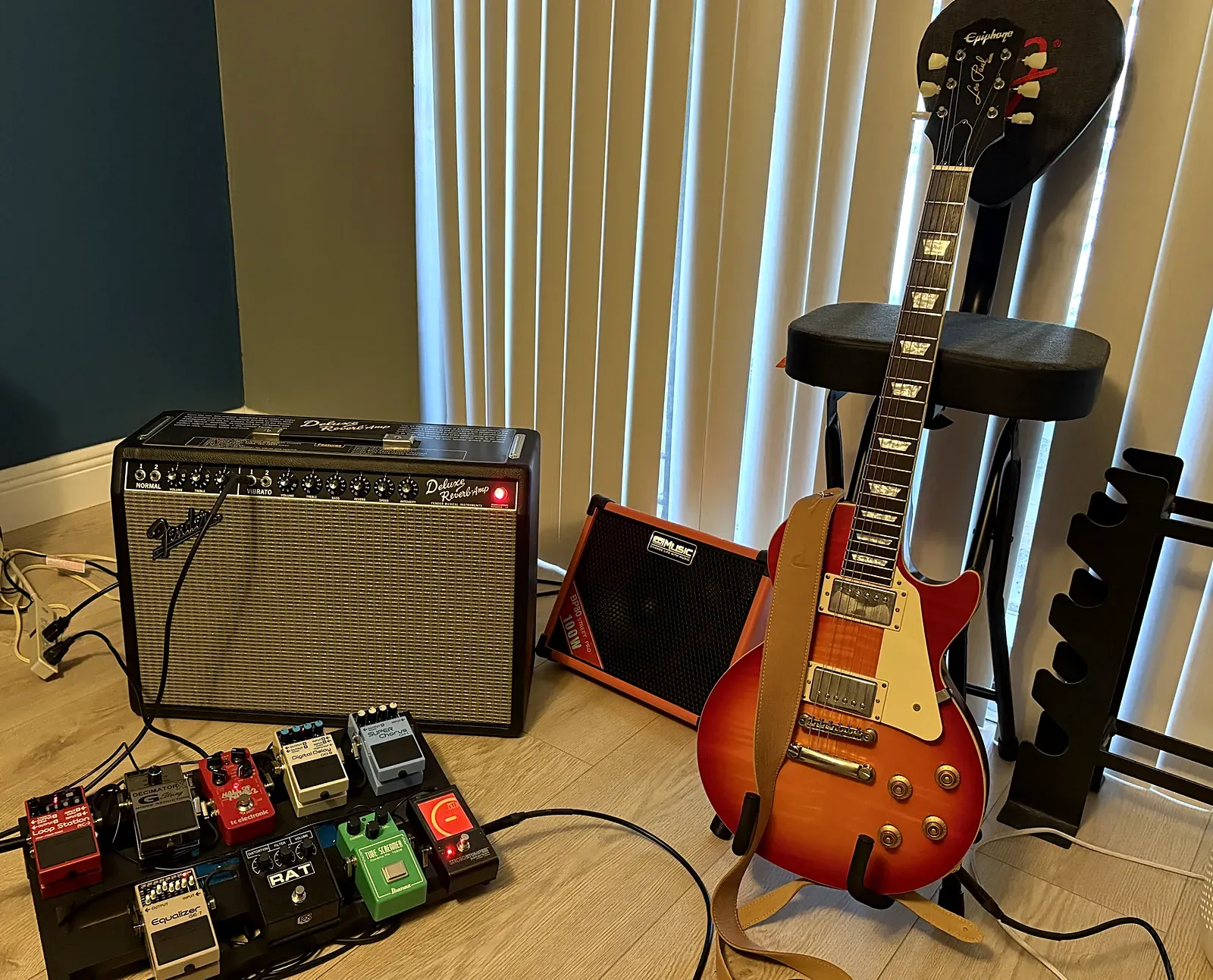
- Guitar: Epiphone '59 Les Paul Standard, the LTD first IBG model
- Tuner: Peterson StroboStomp
- Overdrive: JHS Morning Glory
- Overdrive: Ibanez TS808
- Distortion: Pro Co Rat
- EQ: Boss GE-7
- Delay: Boss DD-8
- Reverb: TC Electronic Hall of Fame 2
- Noise gate: ISP Technologies Decimator X G String
- Amp: 1965 Fender Deluxe Reverb reissue
I love that amp. I'm sure my neighbors hate it.
Still playing
When I was young, I probably dreamed about being a rock star. I'm older now and happy with how it shook out. I get paid to do creative work, I'm not an accountant, and I still come home and play for nobody but myself and a toddler with a yellow guitar.
Noel Gallagher once told Total Guitar he warns kids that guitar isn't a video game. "You'll never master it, and you'll never complete the game," he said. Good. It's more addictive than any game anyway.